ServicesRoof-Mounted Solar
Roof-Mounted Solar in Garland
Your panels go up on mounts lagged into the rafters, and each hole is flashed and sealed. We document every step as we work. At the end, you know what sits on your roof and exactly how it is held there.
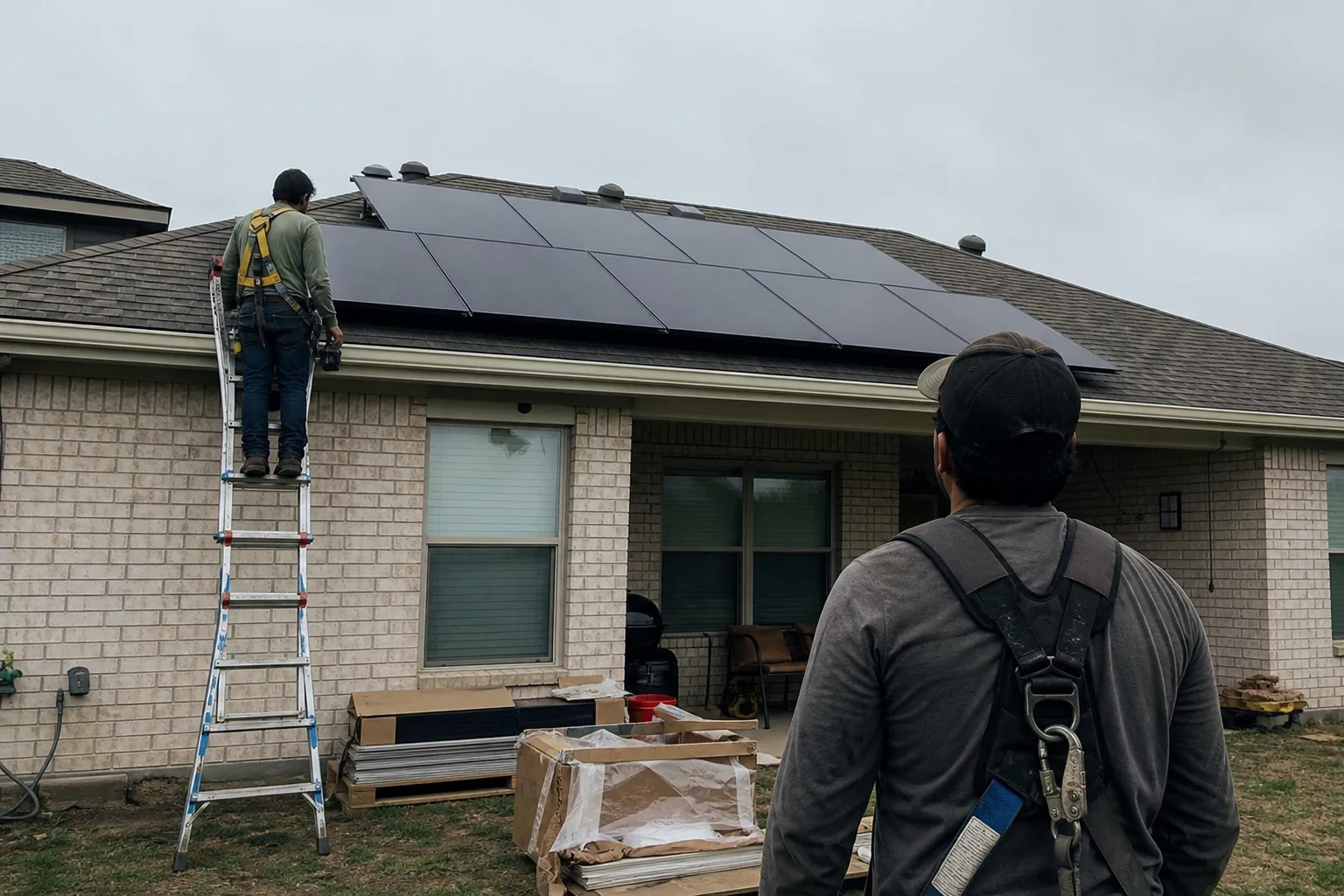
Panels on your roof, attached the right way
Roof-mounted solar is the most common setup on homes. The panels sit on aluminum rails. The rails bolt to mounts that go down into the rafters, not just into the plywood deck. Done right, the roof stays dry and the array holds up to North Texas wind and hail.
Most of this work ends up hidden under the panels. So we take photos as we go: the rafters we found, each mount before and after flashing, the wire runs and the grounding. You keep that record. Nobody has to take our word for what happened on your roof.
If your shingles are close to the end of their life, we will say so before anything gets installed. Taking an array down later to put on a new roof adds real cost, and it is better to know that up front.
What the job includes
- Roof and attic check
- Before we design anything, we walk the roof and look for worn shingles, soft spots and old repairs. We also check the attic to see rafter size and spacing. We show you what we found, good or bad.
- Flashed mounts into rafters
- We locate each rafter, drill a pilot hole and fill it with sealant. A metal flashing slides under the shingle course above, so water runs over the mount instead of into it.
- Rails and panel layout
- Rails are spaced to the rafters and the panel size. We keep the required clear paths along the ridge and edges for firefighter access. Panels sit a few inches off the roof so air can move under them, which helps output in summer heat.
- Wiring and conduit
- Wires are clipped to the rails, not left lying on shingles. The run down to your electrical panel goes in conduit, kept tidy along the roofline or pulled through the attic. Everything gets bonded to ground, and we add the rapid shutdown gear required by code so the array can be switched off right at the roof.
- City permit and utility paperwork
- We pull the permit with the city and meet the inspector on site for the review. The utility has its own paperwork before your system can switch on, and we file that for you as well.
When roof-mounted solar is a good fit
Your roof gets steady sun
South and west facing roof sections with little shade from trees or a neighbor's second story usually produce well. East faces can work too. We show you which faces we would use and why.
The roof has plenty of life left
Panels last a long time. If your shingles are fairly new or in solid shape, it is a good time to put an array on top of them.
You want to keep the yard open
A roof array uses space you are not doing anything with. The backyard stays yours.
Summer bills are the problem
If air conditioning drives your bill up from June through September, roof panels make the most power in that same stretch of long, hot days.
What happens during a roof install
- 1
Phone call and site visit
First comes a phone call. You tell us about your house and your electric bills, and we set a day to visit. While there, we look over the roof, attic and electrical panel and record what we find in each.
- 2
Design and written estimate
We fit the panels to your real roof faces and write the estimate item by item. If the roof needs work first, the estimate says so, along with the signs we saw.
- 3
Permit and scheduling
We draw up plans for the permit and the utility application and handle the filing for both. Once they are approved, we give you a call to pick an install date.
- 4
Install day
Roof work takes one to two days on most houses. We install mounts, rails, panels and wiring and photograph every mount before it gets covered. Each evening we pick up and haul away screws, wire scraps and boxes.
- 5
Final check and switch-on
After the city approves the work, the utility signs off on the hookup. We then walk you through the monitoring app and give you the photo record of the full job.
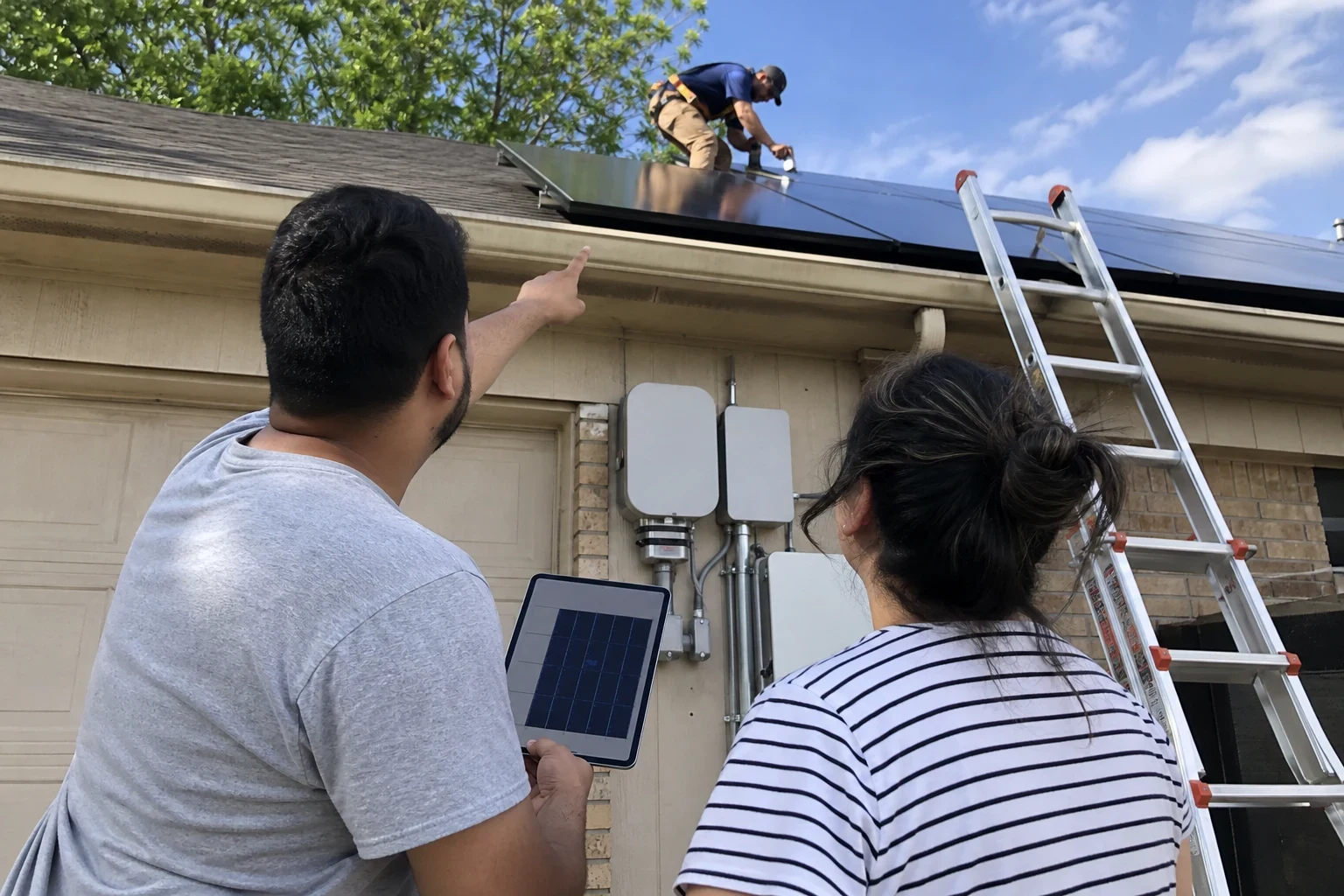
What sets the cost of a roof array
Every roof prices out differently. Panel count plays a part, and so do how tough the roof is to work on and what turns up when we inspect it. The written estimate breaks out every item so you know where your money goes.
- Roof pitch and height
- Steep pitches and two-story roofs call for extra safety gear and more hours. A low, single-story roof goes faster.
- Roofing material
- Composition shingle is the simplest to mount on. Tile and standing seam metal take different hardware and more labor.
- Number of panels and roof faces
- Each added panel adds cost, and splitting the array over several roof faces takes more rails, mounts and wire than one large area.
- Your electrical panel
- Some electrical panels, often older or smaller ones, can't handle a solar connection as is. If yours needs work, we show you the reason and what it takes.
- Permit and utility requirements
- City permit fees and utility hookup rules add a little to the price. You see them on the estimate, never as a surprise charge.
Common questions on roof-mounted solar
Something not covered here? (972) 456-9943
Will panels make my roof leak?
Not if the mounts go in properly. Most solar leaks come from a mount that missed a rafter or had no flashing. Every mount we set lands in a rafter, gets sealant in the hole and a flashing slid under the shingles above it. We photograph each one before a panel goes over it.
Do you work on tile or metal roofs?
Yes, using the right hardware. Tile takes hooks or replacement tile mounts, and standing seam metal usually gets clamps that hold the seams with no drilling. During the site visit we tell you which approach your roof needs.
What happens if I need to reroof later?
The panels and rails must be taken down and put back up, which adds cost. That is why we check the roof's condition before any design work. If it is nearing replacement, we tell you straight.
Can the panels handle hail?
Most panels use hail-rated tempered glass and ride out ordinary storms fine. Very big hail can still break one. Call your insurance agent and ask how your policy treats rooftop panels. If one does crack, our solar repair service replaces it.
Does someone have to be home during the install?
Not all day. We need to get into the attic and the electrical panel at certain points, and power goes off briefly for the final hookup. We go over the timing with you before the install date.
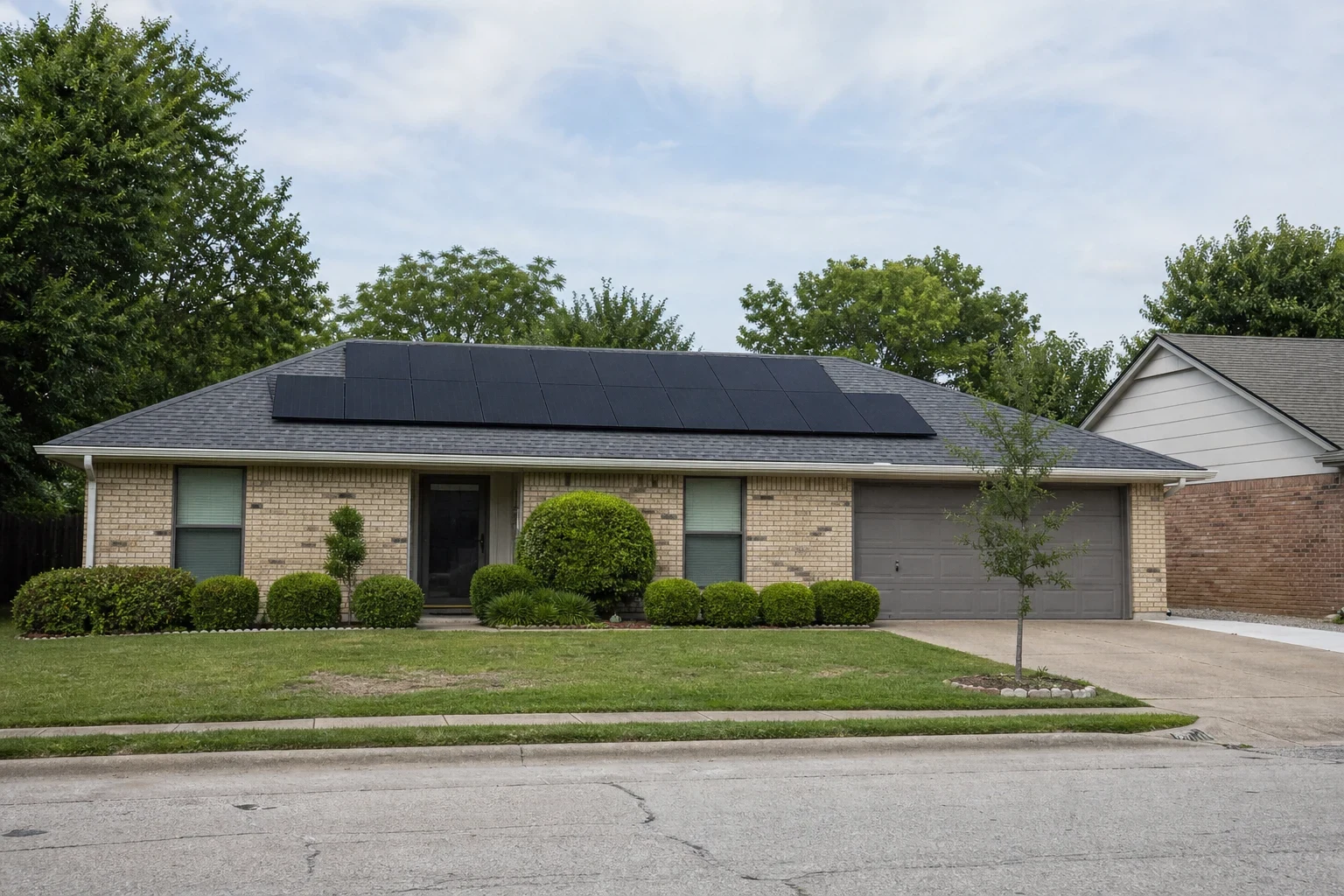
Start with a look at your roof
We check your roof, attic and electrical panel, take photos, and tell you straight whether roof-mounted solar makes sense for your home. Then you get a written estimate to think over.