ServicesSolar Panel Installation
Solar Panel Installation in Garland
We put solar on your home the right way: a real roof check, a design sized to your bills, clean wiring and a permitted system. We photograph each step, so you see the work under the panels as well as on top of them.
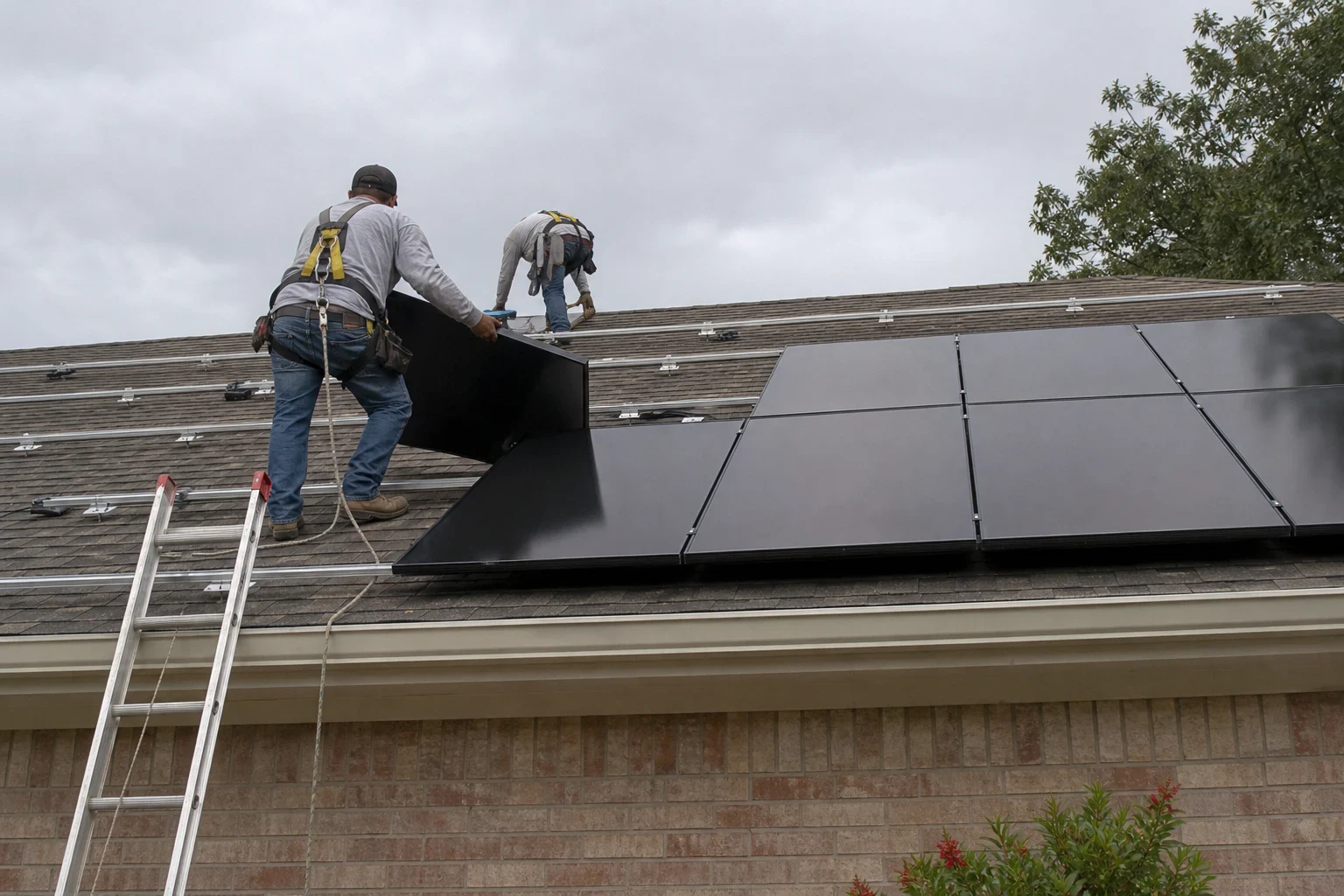
What a Solar Install Actually Involves
A solar system is more than panels on a roof. It is mounts bolted into rafters, flashing that keeps water out, conduit run along the house, an inverter or microinverters, a disconnect and a tie-in at your electrical panel. Each part has to be done right for the system to pass inspection and run for decades.
Most of that work ends up hidden. Once the panels are down, nobody can see whether a lag bolt hit the rafter or missed it. That is why we take photos as we go and hand them to you at the end. You get a record of what was found and what was done.
Solar makes sense when your roof gets good sun, has years of life left and your electric bills are high enough to matter. North Texas summers run air conditioners hard, so a lot of homes here fit. If yours does not, we will say so.
What's Included in Your Installation
- Roof and attic check
- We go up on the roof and into the attic. We look at shingle condition, decking and rafter spacing, and we note anything that affects the install.
- System design from your bills
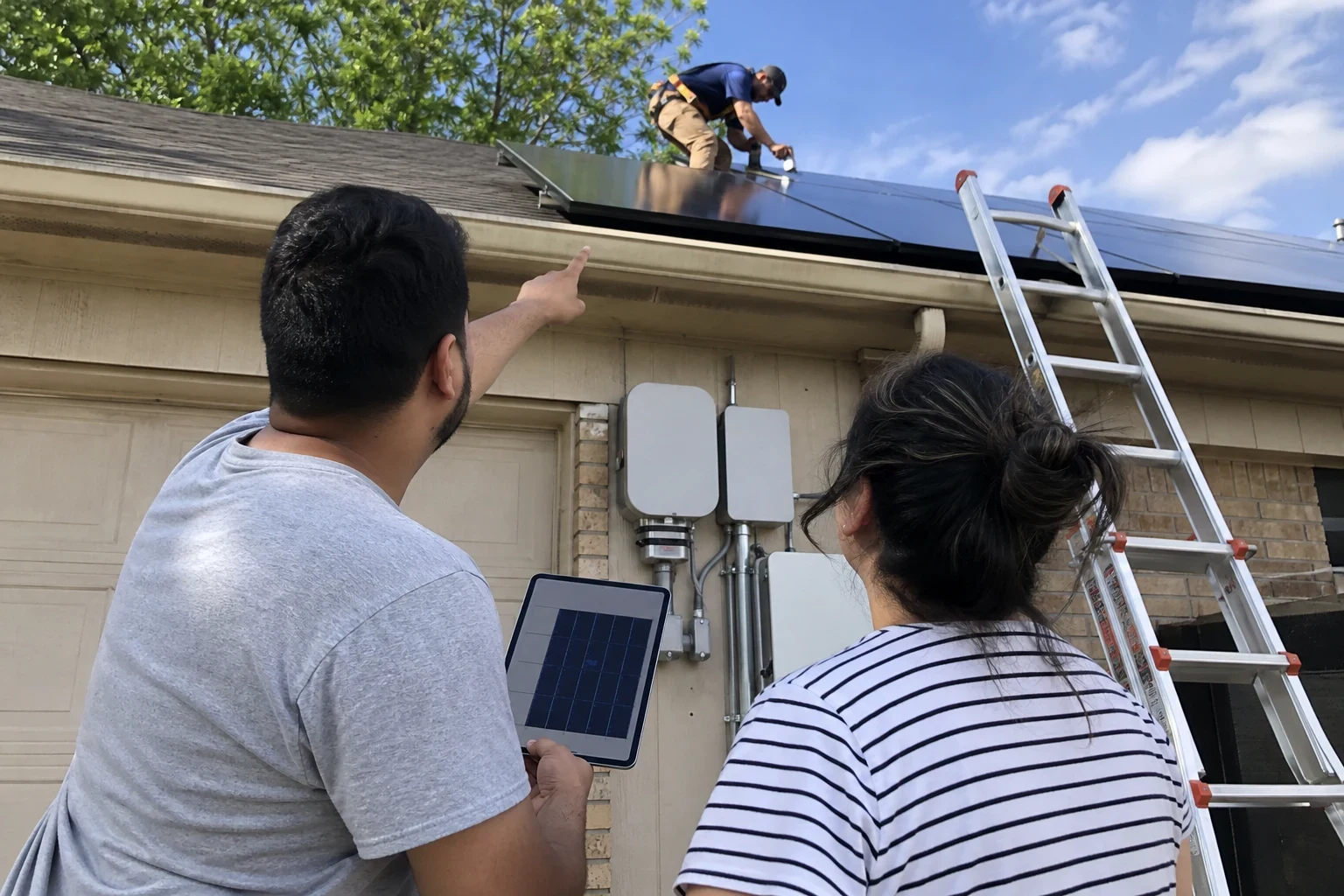
- We size the system from your past year of electric use, not a guess. You see the panel layout on your roof before anything is ordered.
- Permit and utility paperwork
- We pull the city permit and handle the interconnection application with your electric utility. You do not have to chase forms.
- Flashed, sealed roof mounts
- Every mount is lagged into a rafter and flashed under the shingles. We photograph mounts before the rails go on, so you can see each one.
- Wiring and panel tie-in
- We run conduit neatly along the house and connect the system at your electrical panel with the required disconnect and labels.
- Startup, monitoring and handoff
- We turn the system on, set up the monitoring app with you and give you the full record from the job.
When Solar Makes Sense for Your House
Painful bills every summer
When July and August send your bill climbing, panels can take on a large part of what the AC uses.
Roof faces pointing south or west
The more hours of sun a roof face gets, the more power it makes. An east face can still do the job.
Not much shade overhead
Tall trees over the roof lower production. We watch how shade falls through the day before we lay anything out.
Shingles with years still in them
Panels stay in place 25 years or longer. If the shingles are nearly worn out, replacing them first is the better move, and we will be upfront if that applies to you.
You expect to stay put
The savings add up over years, so the longer you own the house, the more of them you collect.
What Moves the Price
Every home is different, so we price after the site visit, not before. Your estimate lists each part of the job on its own line. These are the things that make one install cost more or less than another.
System size
More panels means more equipment and more labor. Size comes straight from how much power your home uses.
Roof layout
A simple roof with one big sunny face goes faster than a cut-up roof with several small planes, steep pitches or tile.
Your electrical panel
Older or full panels sometimes need an upgrade before solar can tie in. We open yours up during the site visit, so any upgrade shows up on the estimate from day one.
Equipment choice
String inverters, microinverters and panel brands all differ in cost. We explain the tradeoffs and let you pick.
Adding storage
A battery adds cost and its own wiring. Our Battery Storage page covers how that works.
The Job From First Visit to Handoff
- 1
Site visit
We get up on the roof, look through the attic and open your electrical panel. Afterward we sit with you and explain what we saw.
- 2
Design and permits
We lay out the system and review the design and figures with you. Then we file the permit and the utility application. Waiting on those approvals usually takes the most time.
- 3
Install day
The roof work runs one to two days for most houses. We put in mounts, rails and panels, wire everything and photograph each stage. The yard and driveway get cleaned up before we go.
- 4
Inspection and turn-on
The city sends an inspector to check the work. When the utility approves the connection, we switch the system on and make sure it is making power.
- 5
Handoff
We hand over the job record and your monitoring login, then show you the disconnect and how to read your production numbers.
Solar Installation Questions
Will putting holes in my roof cause leaks?
Every mount goes into a rafter and gets metal flashing slid under the shingles, plus sealant. That is the standard way to keep water out. We photograph each mount before it gets covered, so you can see how it was done.
Does my roof need to be replaced first?
Not always. If your shingles have plenty of life left, we install on what you have. If they are close to worn out, we will show you what we saw and recommend getting the roof done before the panels go up, since removing and resetting panels later adds cost.
How long does the whole thing take?
The work on your roof is usually one to two days. Permits, inspection and utility approval take longer, often several weeks. We keep you posted at each step.
Do I need a battery with my panels?
No. Panels work fine on their own and feed your home during the day. A battery lets you store power for evenings or outages. We can add one now or later; see our Battery Storage page.
What about hail?
Hail is a real thing in North Texas. Most panels are built and tested to take hail of a good size, and we can go over the ratings on the panels we quote. It is worth checking with your homeowners insurance on how they cover a solar system too.
Do I have to be home on install day?
Not the whole time. We need access to your electrical panel and the attic, and we like to walk you through the plan in the morning. Many people head to work and hear from us at the end of the day about how it went.
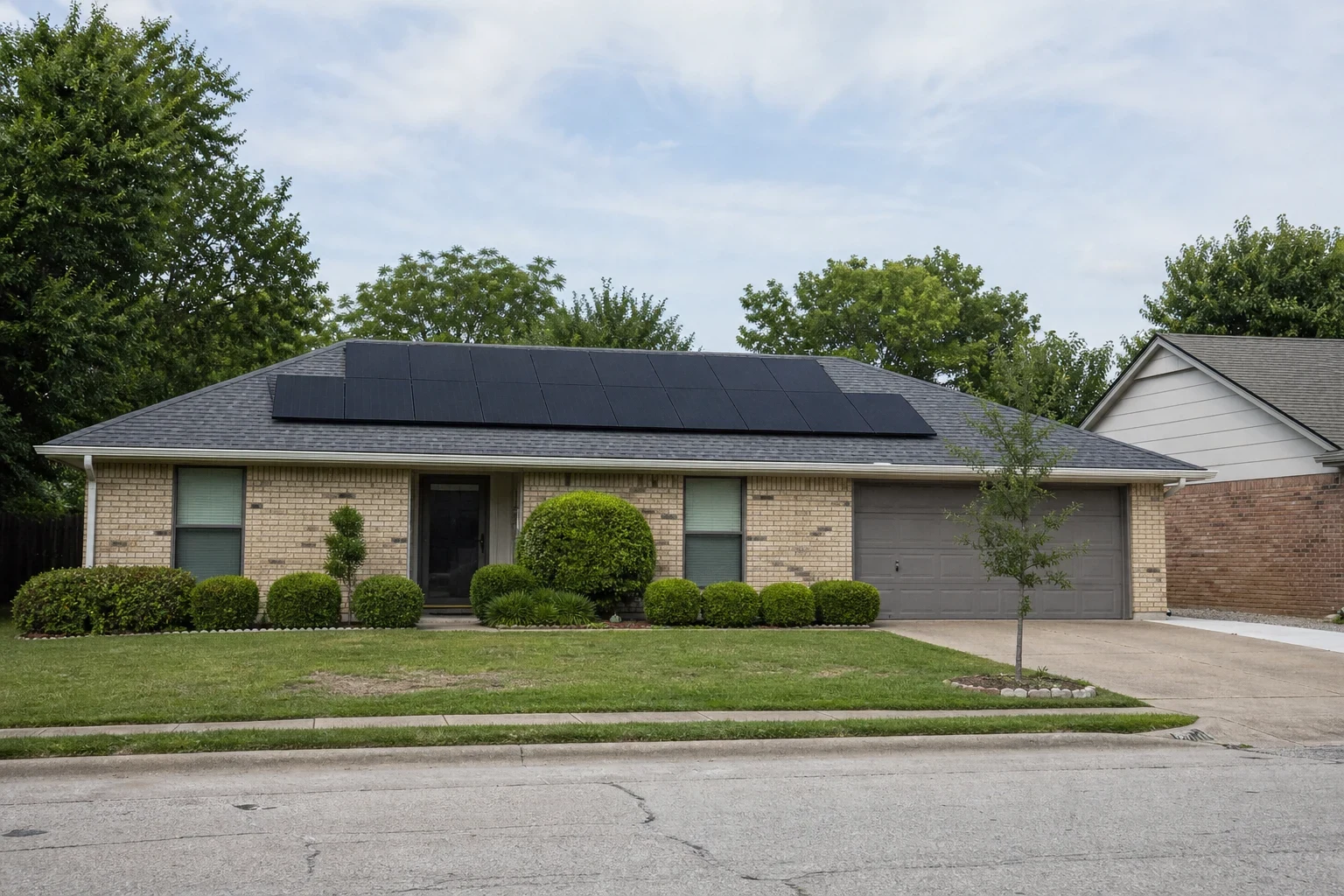
Ready to See If Solar Fits Your Home?
Give us a ring and tell us about your home and your bills. We will set up a site visit, check the roof and panel, and walk you through what we find.